Protect Women Workers - Push for the Ratification of the Domestic Workers Protection Bill (RUU PPRT)
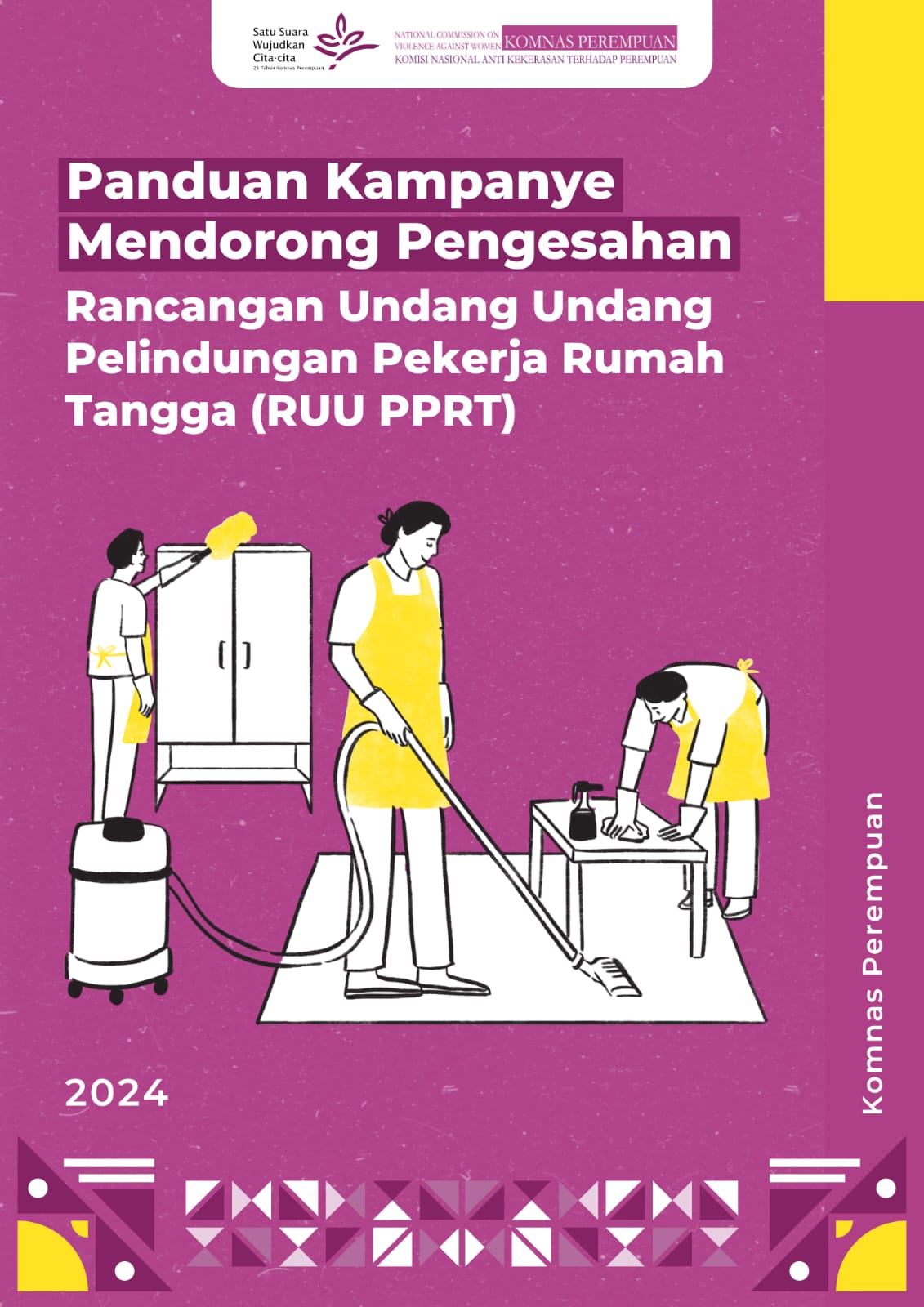
Protect Women Workers: Push for the Ratification of the Domestic Workers Protection Bill (RUU PPRT)
Domestic workers (PRT) are those who work specifically to care for households and family members within them. They fall into the category of care work, which is also one of the oldest types of work. The existence of domestic workers is rooted in the global history of slavery and the slave trade in the 19th century, colonialism, and other forms of forced labor. The role of domestic workers in the continuity of the public sector cannot be ignored. Domestic workers are invisible forces that enable the functioning of the economy, government, services, and other public sectors. They are the pillars of public work through domestic institutions, namely the family who takes care of the household while the homeowners, both men and women, work in the public sector.
The National Network for Domestic Workers Advocacy (JALA PRT) conducted a rapid assessment in 2009 on the number of domestic workers in Indonesia. The results showed that the number of domestic workers in Indonesia was estimated at 10,744,887, with 67% of middle and upper-middle class households employing domestic workers. Of this figure, approximately 30% are child domestic workers (PRTA). The results of the JALA PRT rapid assessment confirmed International Labour Organization (ILO) data stating that the majority of domestic workers are women, which is approximately 92%. JALA PRT has even conducted research from the compiled data that the average age of domestic workers consists of 22% aged <18 years, 57% aged 18-50 years, and 21% aged >50 years. From the educational background, those with elementary school education are 27%, junior high school 68%, and high school 5%; and most come from rural and poor urban areas.
Despite the large number of domestic workers in Indonesia and Indonesian migrant domestic workers, domestic work remains largely unrecognized and unprotected by law. In fact, they are a vulnerable group to violence and abuse. According to JALA PRT data, there were 2,641 cases of violence against domestic workers between 2018 and 2023. The majority of cases involved psychological, physical, and economic violence in the world of work. A number of domestic workers experienced unpaid wages (2-11 months’ salary), were fired, or had their wages deducted by their employers when they were sick and unable to work. While in fact, domestic workers have fulfilled the elements of an employment relationship, namely the existence of orders, work, and wages as stated in Article 1 of Law No. 13 of 2003 on Manpower. In essence, it is imperative that the Domestic Workers Protection Bill (RUU PPRT) be enacted without delay in order to safeguard domestic workers (PRT) from the aforementioned vulnerabilities.
2024 is a critical year for advocacy of the Domestic Workers Protection Bill (RUU PPRT), especially as the current term of the House of Representatives of the Republic of Indonesia (DPR RI) will soon end. Meanwhile, the Domestic Workers Protection Bill is yet to be discussed and agreed upon in the DPR RI's Level I Deliberations. To maximize the increasingly limited time, the National Commission on Violence Against Women (Komnas Perempuan) and civil society networks are consolidating strategies and joint actions to continue the advocacy for the Domestic Workers Protection Bill, especially through formulating public campaigns in 2024. Komnas Perempuan hopes that this can be used as a public reference in developing campaigns to push for the Domestic Workers Protection Bill until it is passed by the DPR RI.

