Stop Torture
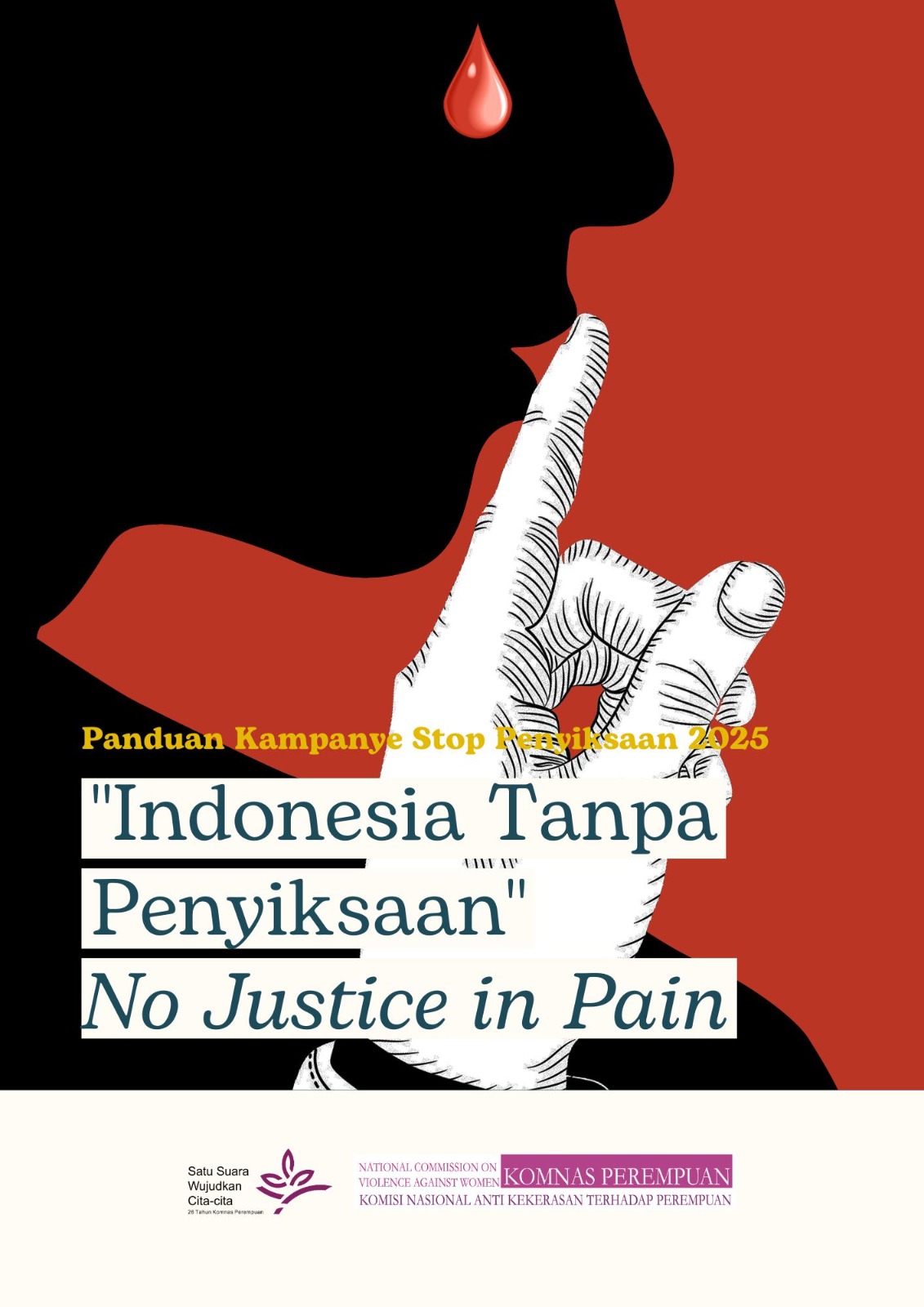
Stop Torture
The international community considers torture a serious, systemic, and unacceptable human rights violation. Indonesia has committed to opposing torture for the past 25 years through its ratification of the Convention against Torture and Other Cruel, Inhuman or Degrading Treatment or Punishment (CAT) through Law No. 5 of 1998 on the Ratification of the Convention against Torture and Other Cruel, Inhuman or Degrading Treatment or Punishment.
Despite numerous normative frameworks for the elimination of torture, both contained in international human rights instruments as well as national legislation and policies, the practice of torture and other forms of cruel, inhuman, or degrading treatment or punishment continues to occur, particularly in detention and detention-like institutions, with perpetrators including law enforcement officers. Therefore, ongoing public education, outreach, and various campaigns are crucial to minimize and prevent torture.
In an effort to prevent and tackle acts of torture and other cruel, inhumane, or degrading treatment or punishment, on February 24, 2016 the National Commission on Violence Against Women (Komnas Perempuan) as a National Human Rights Institution (NHRI), became one of five institutions that made an agreement to encourage efforts to prevent torture and ill-treatment by conducting joint monitoring of detention and detention-like places in Indonesia.
This collaboration is called Cooperation for the Prevention of Torture (KuPP). In February 2023, the collaboration was expanded to include the National Commission on Disabilities (KND). KuPP carries out monitoring, studies and the preparation of policy briefs; conducts constructive dialogues; as well as education, especially in order to increase the capacity of stakeholders.
In its development, to strengthen the synergy and prevention movement carried out by KuPP and various partners, in various media, KuPP together with civil society organizations initiated the Stop Torture public campaign.
SMART Voters: Sharp, Initiative-Driven, Tolerant, and Measured
In 2009, the National Commission on Violence Against Women (Komnas Perempuan) launched the Campaign for the Community of Sharp, Initiative-Driven, Tolerant, and Measured (SMART/JITU) Voters to ensure and support the realization of quality General Elections (Pemilu). This campaign involved various community organizations and individuals in a number of regions creating a social movement in the form of the JITU Voter Community, as part of politically educating the community on how to elect national leaders and representatives who are committed to fulfilling human rights and women’s constitutional rights.
Ahead of the 2024 General Elections and Regional Head Elections, Komnas Perempuan deems it crucial to continue the JITU campaign, as the issues faced in the previous cycle’s elections and regional head elections have not changed. Komnas Perempuan notes that violence against women increases annually. The 2023 Komnas Perempuan Annual Notes on Violence Against Women (CATAHU) shows that data on violence against women reached 339,782 cases. Discriminatory bylaws in the name of religion, morality, and forced dress codes that result in restrictions, discrimination, harassment, exclusion, and/or neglect of certain groups, especially women, continue to occur.
Komnas Perempuan data shows that as of early 2023, 305 discriminatory bylaws were found in various regions across Indonesia. Furthermore, it is crucial to ensure that elections are free from violence and inclusive, including for people with disabilities, the elderly, indigenous communities, and others.
The JITU campaign provides the public with an understanding of the importance of the Integrity Pact that must be held by prospective national leaders in the 2024 Elections.
Pundi Perempuan
Pundi Perempuan is a fundraising initiative and solidarity public fund specifically disbursed to support organizations that provide services and safe houses for victims of violence against women. Established in 2001 by the National Commission on Violence Against Women (Komnas Perempuan) in response to the plight of women during the conflicts in Maluku and West Timor, East Nusa Tenggara, it has assisted approximately 60 women's organizations throughout Indonesia since 2003.
Komnas Perempuan does not have a mandate to raise and manage public funds. Therefore, starting in 2003, Komnas Perempuan collaborated with Indonesia for Humanity (IKa), then known as the Indonesia for Humanity Foundation (YSIK), to raise and manage the funds. Funding distribution is divided into two types: grants for operational assistance to service providers and revolving funds intended as initial capital for organizations or individuals to build economic independence.
Vision and Mission Statements
Vision Statement:
Pundi Perempuan is the realization of public solidarity and philanthropy as well as the implementation of state responsibilities that are supportive, empowering and sustainable for women victims of violence and discrimination.
Mission Statement:
Conduct accountable fundraising, management, development, and distribution.
Support and encourage the sustainability of organizations, communities, or individuals who have initiatives to eliminate violence against women.
Provide support for the health, safety, well-being, and capacity of women human rights defenders.
Build and develop networks at local, national, and international levels to strengthen the role of Pundi Perempuan.
Bhinneka (Diversity) is Indonesia
The Bhinneka (Diversity) is Indonesia campaign was launched by the National Commission on Violence Against Women (Komnas Perempuan) in 2012. It was first launched ahead of the 84th anniversary of the Youth Pledge, a historic milestone in which young people from diverse backgrounds unitedly declared their desire to become one unified nation-state, Indonesia. This pledge has led to the Indonesia of today, home to over 207 million people from over 300 ethnic groups and 800 local languages and dialects.
However, the current attitude of mutual respect and celebration of differences seems to be on the brink. Some indications are the toleration of discriminatory bylaws in the name of religion and morality. The number has now reached 421 discriminatory bylaws, an increase of 32 since 2015. Most of these were issued by local governments to promote regional image based on the majority religion. They are considered discriminatory because they limit, hinder, and ignore the fulfillment of human rights guaranteed in the Constitution. Similar discriminatory bylaws also threaten Indonesia's diversity. The increase in discriminatory bylaws also coincides with a rise in intolerance and the perpetuation of violations of the right to religious freedom against religious minorities.
Women are particularly disadvantaged due to their position as symbols of the community and also because of their status as members of minority groups. Various discriminatory bylaws directly target women, leading to legal uncertainty and the deprivation of fundamental freedoms. Intolerance accompanied by violence makes women vulnerable to abuse, trauma or loss of loved ones, being the sole head of a family, the primary breadwinner, and impoverishment.
In this situation, the state's decisiveness in responding remains elusive. Instead of upholding the Constitution and fostering Bhinneka, a number of state officials, both regionally and nationally, hide behind the pretext of majority preference, allowing, if not contributing to, discriminatory policies and intolerance. Some have even openly stated that they no longer want an Indonesia that does not prioritize the symbols of the religion most adhered to by its population.
Meanwhile, the public generally remains quiet (silent majority), unwilling to speak out due to fear of intimidation, uncertainty about potential change, or simply indifference. These attitudes leave victims marginalized and neglected. Meanwhile, the nation’s shared promise to position Indonesia as a unified nation based on respect for the differences within its society is being abandoned.
If the situation continues to be ignored, if we don't support and remind each other, will we be able to inherit a diverse Indonesia? In response to the current situation of diversity in Indonesia, the Bhinneka is Indonesia campaign is intended to open spaces for interaction for young people to unite their heads, hearts, and works in joint activities that invite more people to care for and to help maintain Bhinneka.
What's in Bhinneka is Indonesia?
Within Bhinneka is Indonesia, various campaign activities can be conducted. These could take the form of creative workshops, such as sculpting, crafts, and screen printing. There could also be discussions with community groups actively advocating for Indonesia's diversity. There's also an arts stage where we can enjoy, or even perform, in musical expressions, poetry, and other forms of performances.
The Bhinneka is Indonesia campaign (and its journey) that has been carried out include:
In 2011, Komnas Perempuan began discussions with partners and diversity networks to find the most appropriate format for the Bhinneka is Indonesia campaign;
In 2012, with partners and diversity networks, and involving a network of artists, Komnas Perempuan discussed “Different is Me”;
In 2013, collaborated and collected graphic designs on diversity issues with students from the Bina Nusantara (Binus) University;
In 2014, created murals in public places and in victim communities with a network of artists;
In 2015, held a design and photography exhibition on diversity at Tebet Green, South Jakarta;
In 2016, collaborated with photojournalists and held a photography exhibition on diversity at Cemara 6 Gallery, Central Jakarta.
The Bhinneka is Indonesia campaign will continue to be implemented, and we hope to see a growing number of young people joining us in Bhinneka is Indonesia. These young men and women believe that Indonesia exists because we are different, and that it will only exist if each citizen is free to be different. Only by respecting these differences can a sense of humanity be fostered.
Protect Women Workers: Push for the Ratification of the Domestic Workers Protection Bill (RUU PPRT)
Domestic workers (PRT) are those who work specifically to care for households and family members within them. They fall into the category of care work, which is also one of the oldest types of work. The existence of domestic workers is rooted in the global history of slavery and the slave trade in the 19th century, colonialism, and other forms of forced labor. The role of domestic workers in the continuity of the public sector cannot be ignored. Domestic workers are invisible forces that enable the functioning of the economy, government, services, and other public sectors. They are the pillars of public work through domestic institutions, namely the family who takes care of the household while the homeowners, both men and women, work in the public sector.
The National Network for Domestic Workers Advocacy (JALA PRT) conducted a rapid assessment in 2009 on the number of domestic workers in Indonesia. The results showed that the number of domestic workers in Indonesia was estimated at 10,744,887, with 67% of middle and upper-middle class households employing domestic workers. Of this figure, approximately 30% are child domestic workers (PRTA). The results of the JALA PRT rapid assessment confirmed International Labour Organization (ILO) data stating that the majority of domestic workers are women, which is approximately 92%. JALA PRT has even conducted research from the compiled data that the average age of domestic workers consists of 22% aged <18 years, 57% aged 18-50 years, and 21% aged >50 years. From the educational background, those with elementary school education are 27%, junior high school 68%, and high school 5%; and most come from rural and poor urban areas.
Despite the large number of domestic workers in Indonesia and Indonesian migrant domestic workers, domestic work remains largely unrecognized and unprotected by law. In fact, they are a vulnerable group to violence and abuse. According to JALA PRT data, there were 2,641 cases of violence against domestic workers between 2018 and 2023. The majority of cases involved psychological, physical, and economic violence in the world of work. A number of domestic workers experienced unpaid wages (2-11 months’ salary), were fired, or had their wages deducted by their employers when they were sick and unable to work. While in fact, domestic workers have fulfilled the elements of an employment relationship, namely the existence of orders, work, and wages as stated in Article 1 of Law No. 13 of 2003 on Manpower. In essence, it is imperative that the Domestic Workers Protection Bill (RUU PPRT) be enacted without delay in order to safeguard domestic workers (PRT) from the aforementioned vulnerabilities.
2024 is a critical year for advocacy of the Domestic Workers Protection Bill (RUU PPRT), especially as the current term of the House of Representatives of the Republic of Indonesia (DPR RI) will soon end. Meanwhile, the Domestic Workers Protection Bill is yet to be discussed and agreed upon in the DPR RI's Level I Deliberations. To maximize the increasingly limited time, the National Commission on Violence Against Women (Komnas Perempuan) and civil society networks are consolidating strategies and joint actions to continue the advocacy for the Domestic Workers Protection Bill, especially through formulating public campaigns in 2024. Komnas Perempuan hopes that this can be used as a public reference in developing campaigns to push for the Domestic Workers Protection Bill until it is passed by the DPR RI.

